
The Power Trio of Credit Cards to Maximize Your Rewards!
CREDIT CARDS
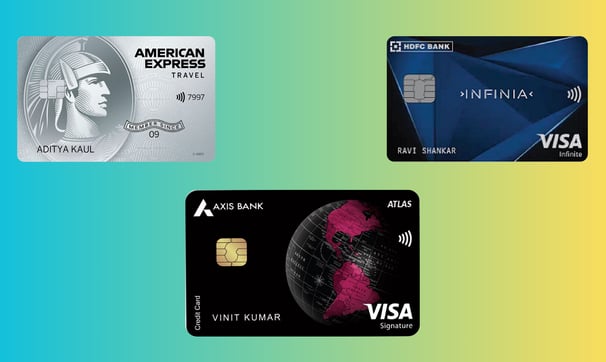
To maximize rewards on travel and expenses, using a combination of credit cards strategically is essential. Here, we delve into an effective strategy that leverages various credit card reward structures, loyalty programs, and points systems to get the most value on trips and big purchases.
Key Components of the Strategy:
HDFC Smart Buy vs. AMEX Points: When to Use Which?
AMEX Points: These points are excellent for high-value redemptions, such as premium international flights or stays in luxury hotels. AMEX points offer attractive transfer rates to popular hotel and airline partners, allowing for valuable travel redemptions, especially when the value per point exceeds ₹0.7.
HDFC Smart Buy Points: HDFC’s Smart Buy portal allows a near-cash conversion where 1 point equals ₹1, making these points highly versatile. Since these points effectively act as currency on the Smart Buy portal, they are a good choice for expenses that wouldn’t yield high redemption rates through AMEX’s transfer partners.
Recommendation: Use AMEX points for high-value redemptions and Smart Buy points for more routine expenses or travel where AMEX’s redemption rates don’t offer as much value.
Understanding the Axis Bank Burgundy Account
The Burgundy account, a premium offering from Axis Bank, can amplify the value of the Magnus card. For Burgundy members, Axis offers a better rewards structure on the Magnus card (5 points per ₹4 rather than the standard 5 points per ₹1). However, certain exclusions, such as government transactions, rent, utilities, and insurance, can limit the card's utility for some users.
Conclusion: For high spenders who can utilize Burgundy benefits, the Magnus card still holds good value, but only when expenses align with its reward categories.
Axis Bank Atlas Card: An Alternative for Frequent Travelers
The Atlas card from Axis is popular among travel enthusiasts, especially those who prioritize hotel or airline loyalty programs. The annual fee of ₹5,000 is offset by 2,500 Edge Miles (worth approximately ₹5,000 in hotel or airline credits), so frequent travelers can recoup their investment easily.
Top Transfer Partners: Atlas offers competitive transfer rates to both ITC and Accor, with an effective 1:2 transfer ratio. Notably, transfers to Accor provide exceptional flexibility and value, with Accor points worth ₹1.8 per point in Accor hotels, yielding a 7.2% return on average expenses.
Milestone Benefits: The Atlas card provides substantial milestone benefits, awarding additional Edge Miles at various annual spending thresholds (3, 7.5, and 15 lakh). These milestones make the card attractive for those who can meet these spending targets.
Optimal Card Combinations for Spending Categories
AMEX Platinum Travel Card: This card is ideal for large purchases where it can yield high-value transfers to hotel or airline partners. The lack of restrictive categories makes it a go-to for big expenses until reaching the four-lakh annual spend threshold.
Axis Atlas: After AMEX thresholds are met, Atlas is a reliable backup, especially when spending aligns with travel or retail purchases. For expenses like shopping, dining, and non-restricted travel spending, Atlas can offer significant returns.
HDFC Infinia or Diners Club Black: These cards serve as fallback options for general expenses and cash-back redemptions when AMEX and Atlas are not ideal choices.
Top Three Things to Remember About the Atlas Card
Travel-Focused Usage: The Atlas card is best suited for frequent travelers who redeem through airline or hotel loyalty programs. Points transfer directly to major hotel brands like Accor and ITC, making it valuable for international travel.
Milestone Spending and Exclusions: Atlas card rewards apply to specific expense types; significant exclusions include government payments, insurance, and fuel. High spenders who can meet the card’s milestones (spending 7.5-15 lakh annually) may benefit the most from the card.
Partnership Redemption: The Atlas card’s primary travel partners are Accor and ITC, which provide excellent redemption options. Additionally, favorable transfer rates to airline partners in the Star Alliance make it a solid choice for frequent flyers.
Strategizing with AMEX, HDFC Infinia, and Axis Atlas
With a combined strategy, the AMEX Platinum Travel card should be used first for significant spends up to its milestone of four lakh annually. Once reached, transition to the Atlas card for travel-related expenses, maximizing milestones and loyalty rewards. For expenses outside of travel and high-exclusion categories, Infinia or Diners Club Black should be the fallback option, as these cards offer reliable cashback rates on a wider range of expenditures.
Dining and Miscellaneous Expenses: The Axis Atlas includes a small benefit for dining via EasyDiner, while AMEX lacks exclusions. For everyday spending flexibility, the AMEX remains optimal.
Future Prospects and Continuous Evaluation
Credit card benefits and loyalty program values are subject to frequent changes, so it’s essential to stay updated on new promotions, devaluations, or policy changes that may impact redemption rates and spending strategies.
General Tips: To maintain a high credit score, avoid closing your oldest card, as this can negatively affect your credit history. Regularly review cards in your portfolio to eliminate redundancies or low-value cards, and adjust spending habits to meet milestone requirements only if they offer clear benefits.
In summary, maximizing credit card rewards requires strategic alignment with travel, dining, and retail purchases while staying within program guidelines. By prioritizing AMEX points for premium rewards, HDFC for cash-like redemption options, and Axis Atlas for travel loyalty, users can unlock optimal value across a diverse array of spending categories. This approach also allows for flexibility in reward redemption, ensuring that the right card is used for each type of expenditure.